New
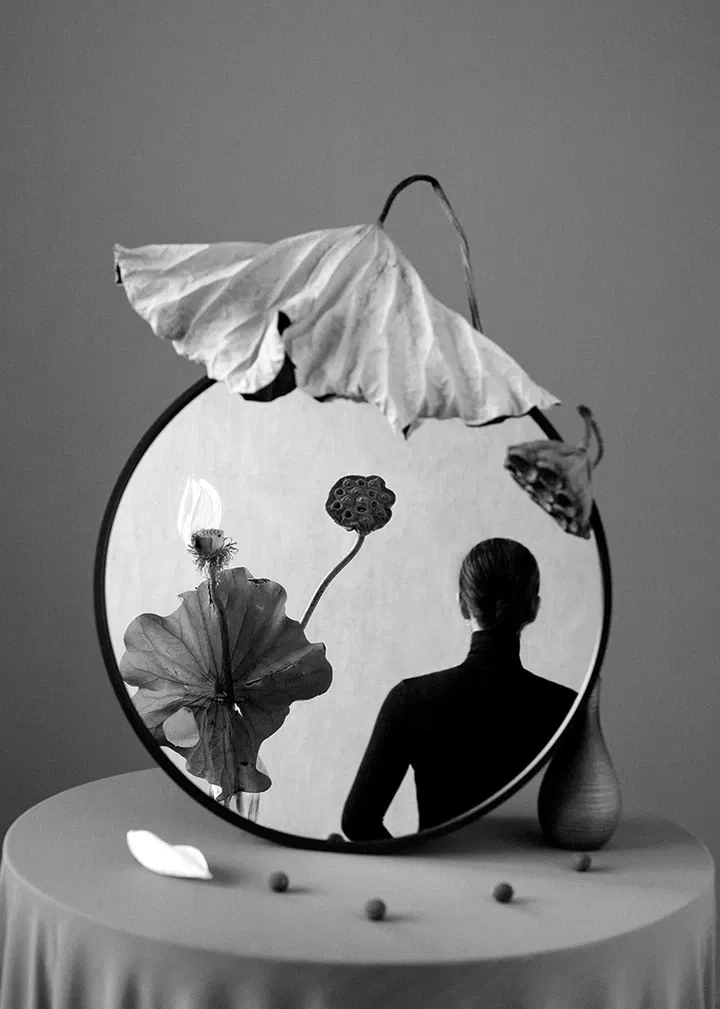
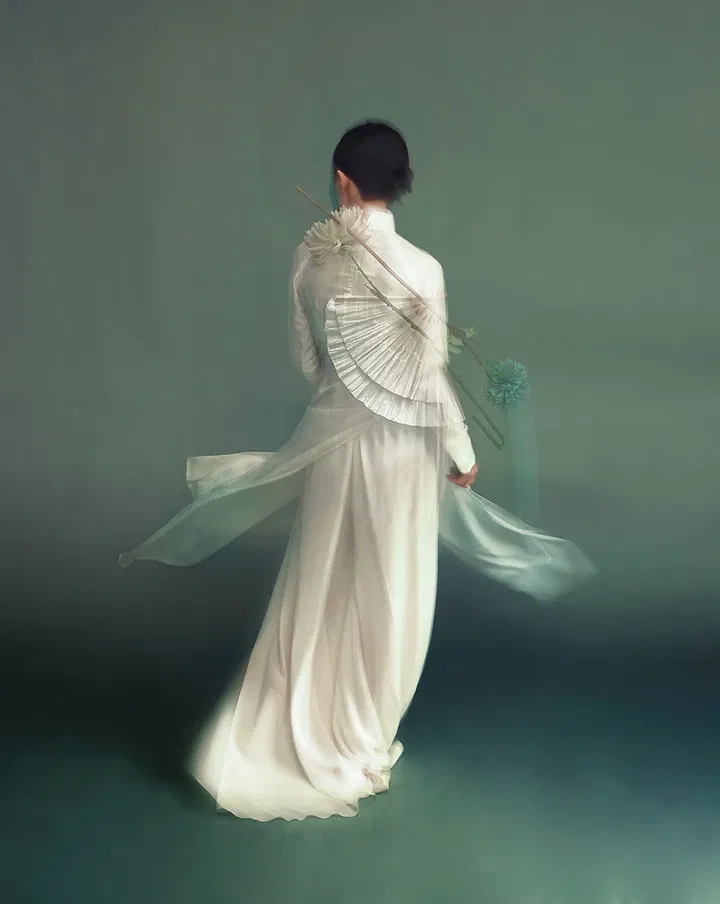
Samsara #1
from € 649
3 sizes available
Unfortunately, this artwork cannot be added to the room view.


Xidong Luo creates photographic worlds in which reality isn’t merely mirrored—it’s reimagined. The Shenzhen-based artist works with mirrors the way others work with metaphors: as fragments of a… Read more
Bio Exhibitions Interview
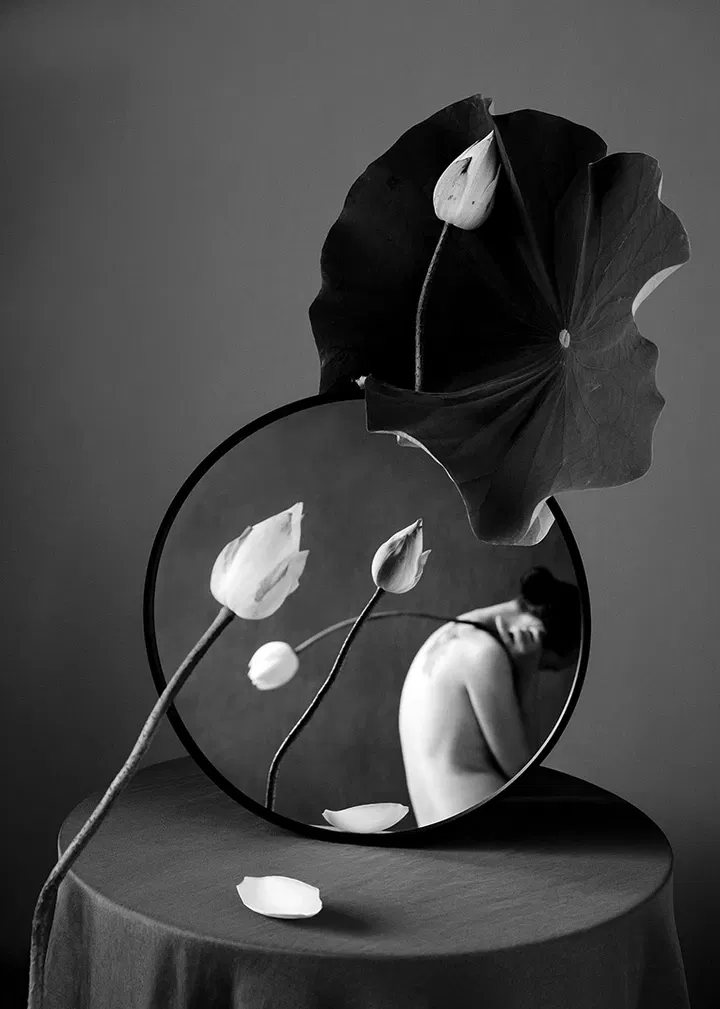
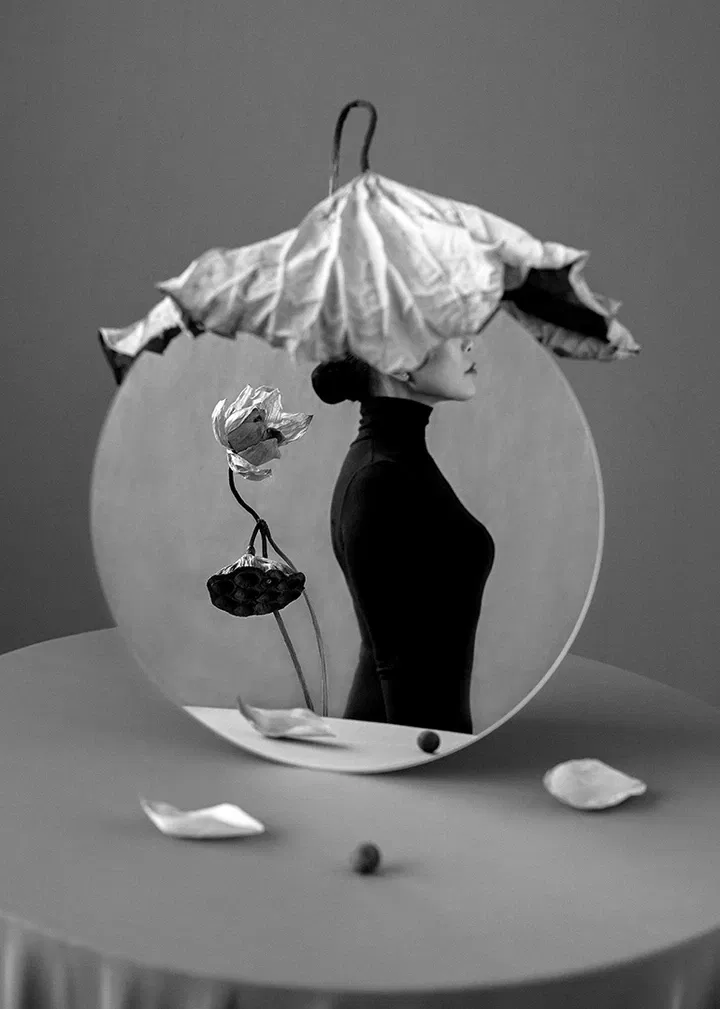
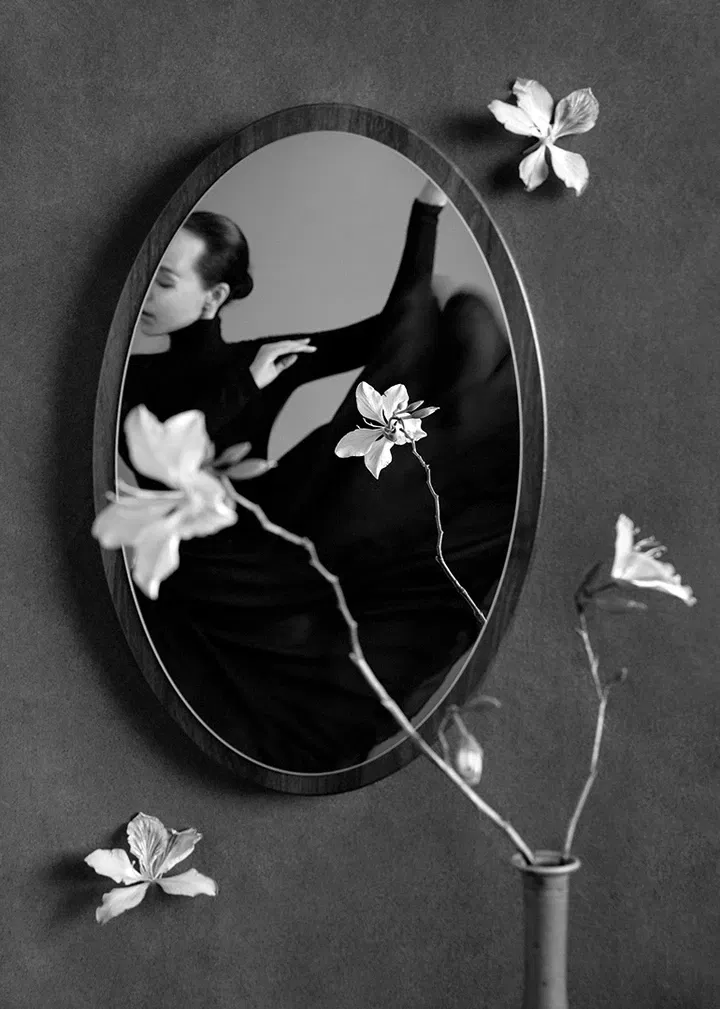
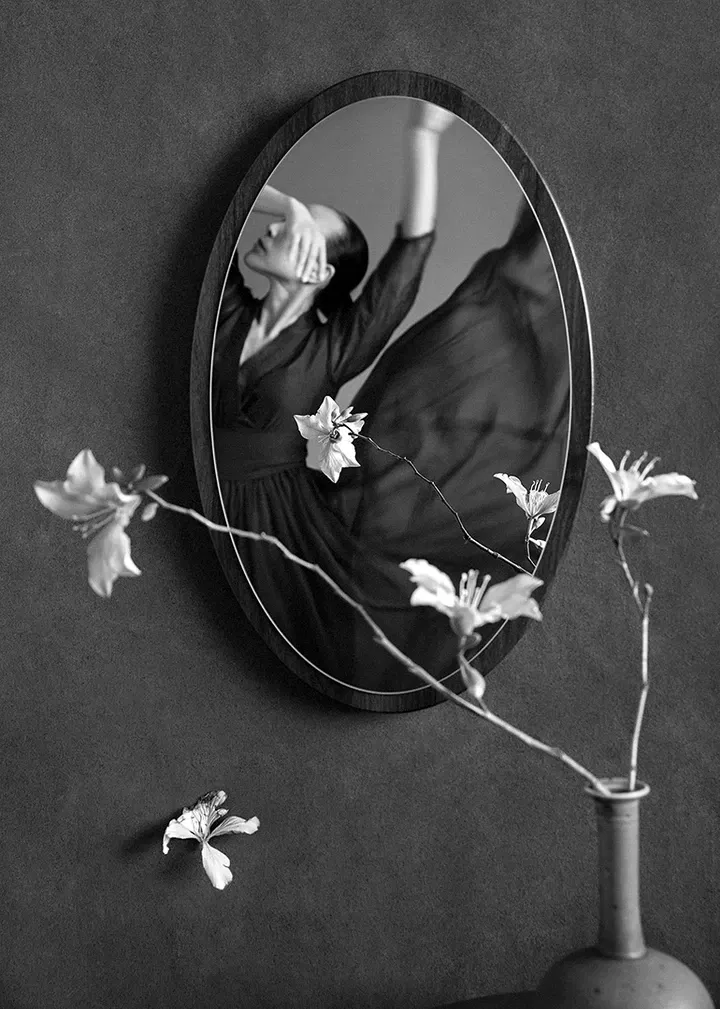
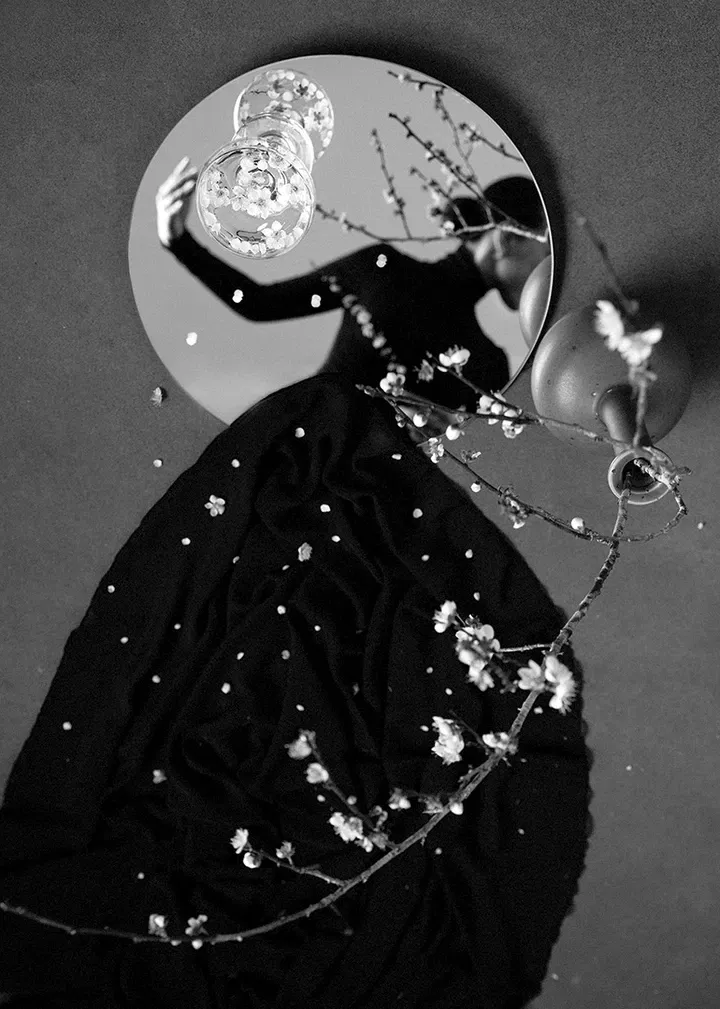
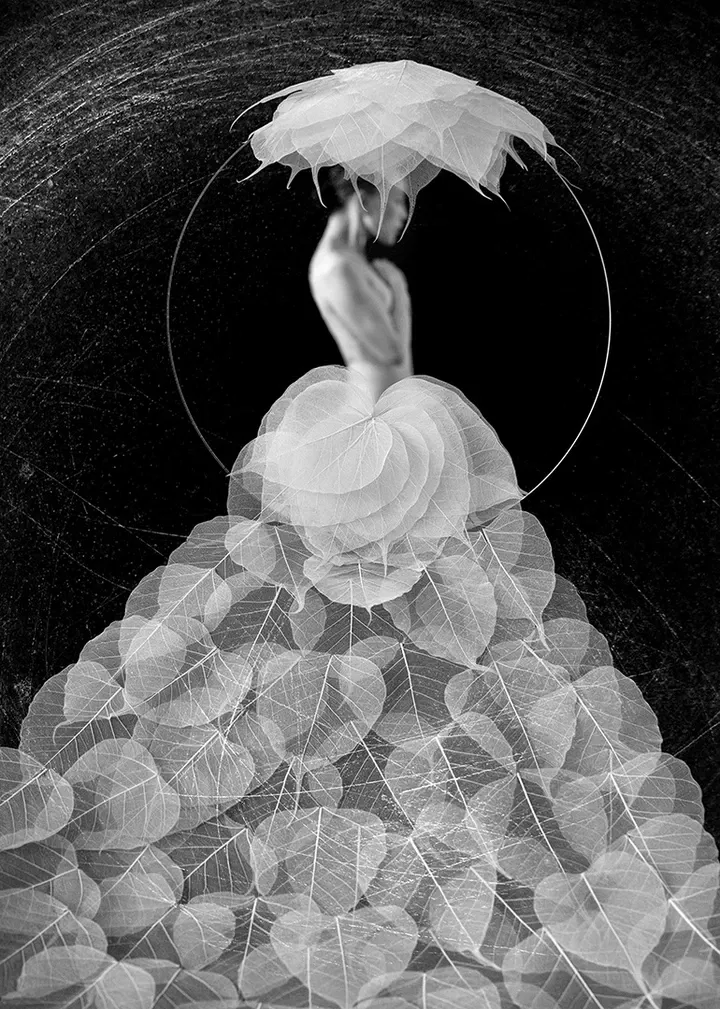
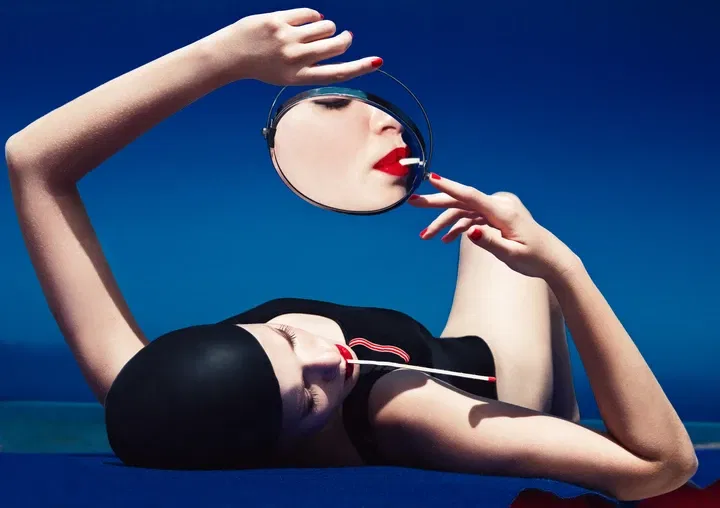
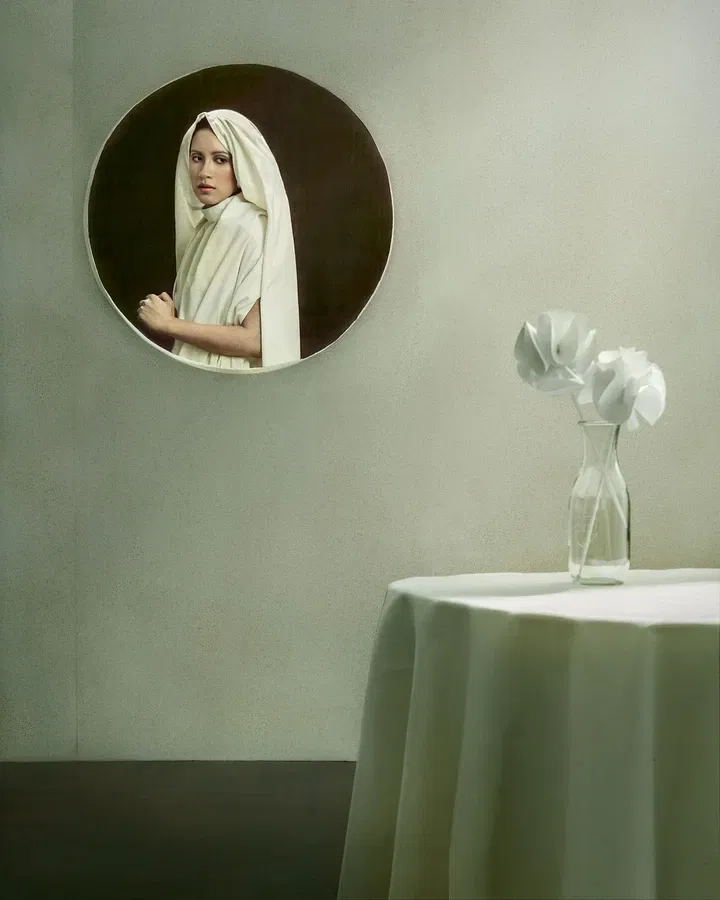
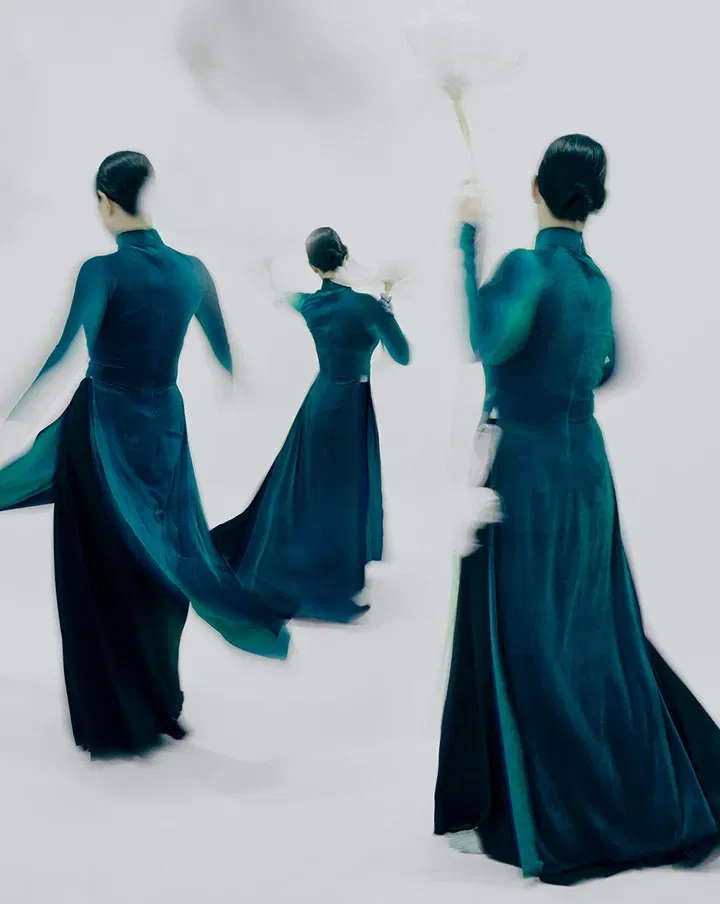
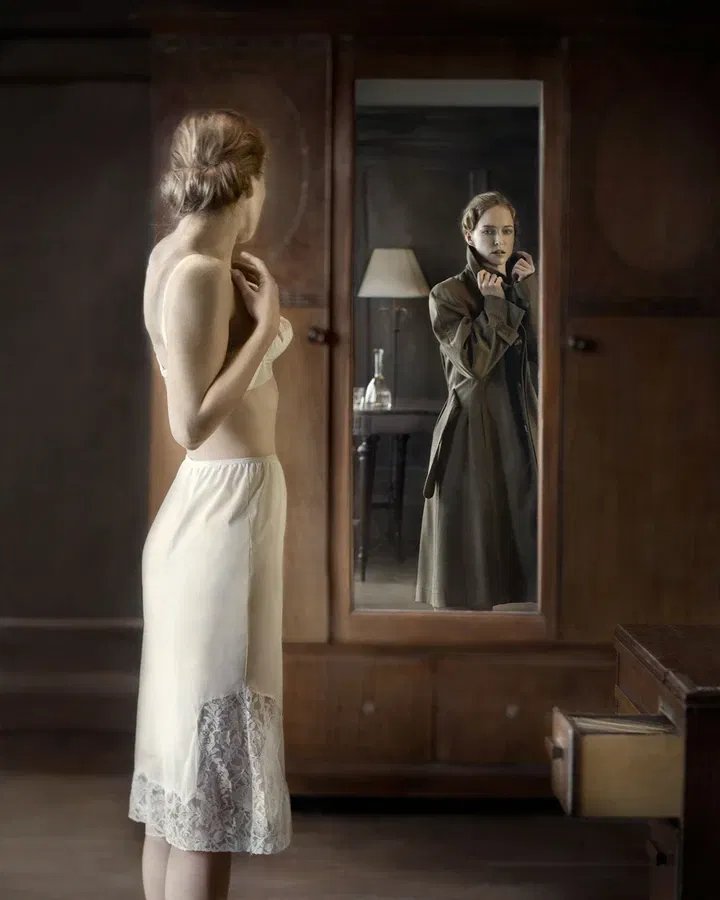
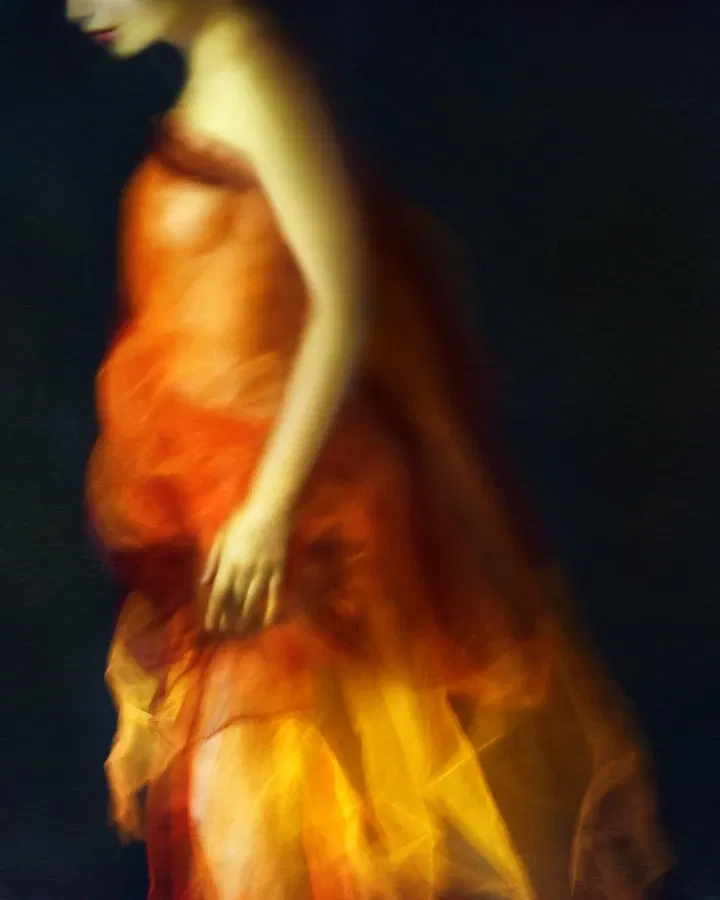
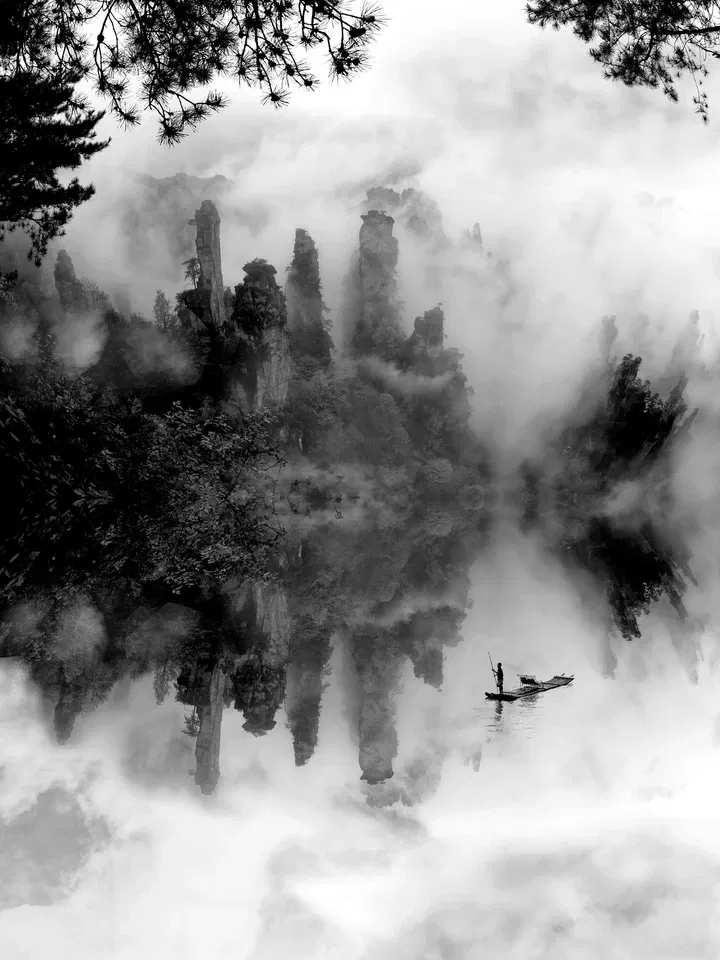
Xidong Luo creates photographic worlds in which reality isn’t merely mirrored—it’s reimagined. The Shenzhen-based artist works with mirrors the way others work with metaphors: as fragments of a world that resists singular surfaces. Her images combine still life, self-portrait, and symbolism into a visual language that is both poetic and precise.
Rooted in Taoist philosophy (“物我合一” – Heaven and Earth coexist with me; all things and I are one) and shaped by Chinese aesthetics, Luo envisions the relationship between humans and nature as a seamless unity. Her mirrored compositions draw on the idiom “镜花水月” – “flowers in a mirror, moon on water”: a metaphor for the illusion of the tangible and the fleeting beauty of life.
At the center of her work lies a paradox: the transience of beauty—and the beauty of transience. Often expressed through wilting flowers suspended in reflective dimensions, Luo’s imagery turns ephemeral moments into quiet symbols of eternity. Her formal language is reduced and meditative: a monochrome palette, organic textures, and reflective surfaces create compositions that function like kōans—silent, distilled, enigmatic.
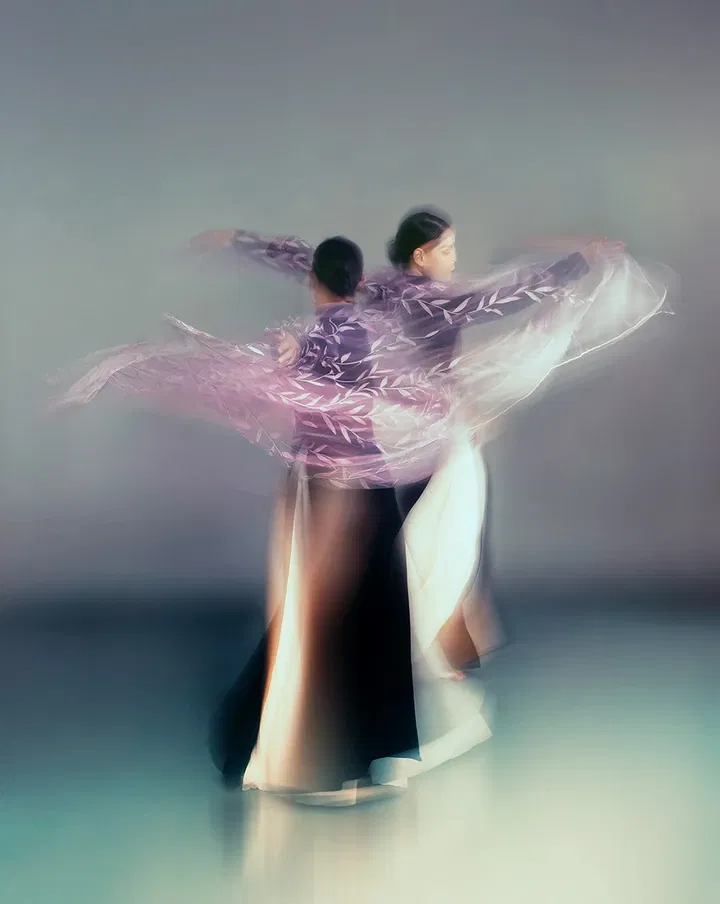
Her creative process begins long before the camera clicks. Each image emerges from a choreography of intuition, control, and change. She calibrates light, mirror, and subject with obsessive precision—sometimes over days—knowing that the decisive moment must be sensed, not forced. Her self-portraits are quiet performances in which she becomes artist, subject, and observer in one. Years of dance practice flow visibly into her work: every gesture holds tension, every curve of the body carries rhythm. From discipline, a new tenderness emerges—one where the strength of vulnerability becomes visible.
Conceptually, Luo navigates the fluid spaces between inner and outer, self and world, illusion and truth. Her vision of photography is built on three elements: visual power, emotional depth, and a resonance that lingers. As she puts it: “Layered exposures, staged surrealism, symbolic distortions? They’re not accidents—they’re the language of revelation.”
Her series explore these ideas from distinct angles:
Lotus reflects the spiral movement of time—where transience becomes a doorway to transformation.
Rite of Spring is a tribute to lightness and cyclical renewal, guided by the elegance of the female form and blooming bauhinia.
Fleeting Beauty embraces aging not as loss, but as growth.
Journey Towards Self turns inward—a photographic meditation on feminine identity, as internal as it is intuitive.
“The most remarkable journey one can embark upon,” Luo says, “is the one of self-exploration.”
Her art invites us to begin this journey—one that reveals the new and transforms the familiar, allowing us to see it through different eyes.
Picasso once said, “you don’t make art, you find it.” Where do you find your art?
I don't find art—it just emerges as naturally as breathing. My work blossoms from within, a visceral flowering of my deepest perceptions about existence. Each image becomes a silent dialogue between my inner world and the universe's hidden rhythms.
From an idea to its materialization: How do you approach your work?
My works usually emerge in two ways:
1) *Epiphany from decay* – When a flower's particular state of withering suddenly mirrors human mortality, like rose petals curling like skeletal hands.
2) *Slow revelation* – Objects I instinctively collect from mountains (a twisted branch, cracked seed pod) sit in my studio for months until one day, their hidden parable clicks.
What is your favorite book?
“Walden” by Thoreau.
Which artist would you like to have coffee with and what would you discuss?
Cindy Sherman—but I'd nervously spill my coffee first. I'd ask how she builds her fictional personas' backstories: Does she start with the costume or the psychological wound? Then I'd confess my own struggle: When I use mirrors to fragment identity in my work, sometimes the reflections feel more 'real' than the original subject. We might end up debating whether all self-portraits are ultimately fictions wearing truth's mask.
How did you get into art?
I am a self-taught photographer. My path with photography evolved from a travel photography hobbyist to a professional newborn photographer & educator to a self-portrait artist. After 8 years of practicing travel photography as a hobbyist, I set up my studio in 2013 and became a professional newborn/family photographer. My personal art project didn't begin until COVID-19.
The pandemic isolation became my unexpected atelier. When civilization retreated during the lockdown, I entered a silent pact with mirrors and mountain weeds. No more clients, no noise—just my face and withering petals trading secrets in the glass. Those empty years didn’t teach me to make art. They taught me to see: how a cracked leaf mirrors a human frown, how isolation polishes the soul like light polishing silver. By the time the world returned, I’d become both the sculptor and the sculpture.
Who are the people in your surroundings that influence you?
Nobody. I don't waste my time on people anymore.
Imagine you have a time machine. Where would you go?
I'd travel 200 years forward—not to see flying cars, but to witness how humanity's relationship with mortality evolves. Would we still photograph graves when death becomes optional? I'd document the new rituals of absence, then bring back these 'future relics' to haunt the present.
Other than art, what are you most passionate about?
Outdoor pursuit and travel. They are the key part of my inspiration.
What are you working on right now?
"The Lotus Chronicles: Genesis-Karma-Dharma-Samsara.” A project which I renew every summer, just like the lotus’s eternal return.