New
Unfortunately, this artwork cannot be added to the room view.


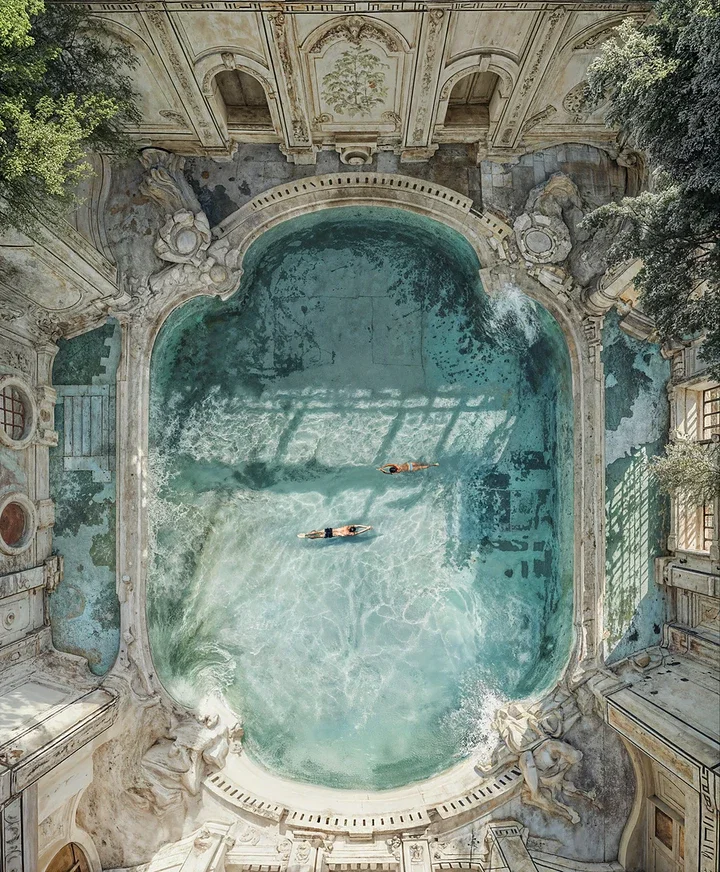
With BAROQUE POOLS, Tomislav Marcijuš opens a pictorial realm where architecture, memory, and imagination seamlessly converge. The sacred, the intimate, and the playful enter into a graceful… Read more
Interview
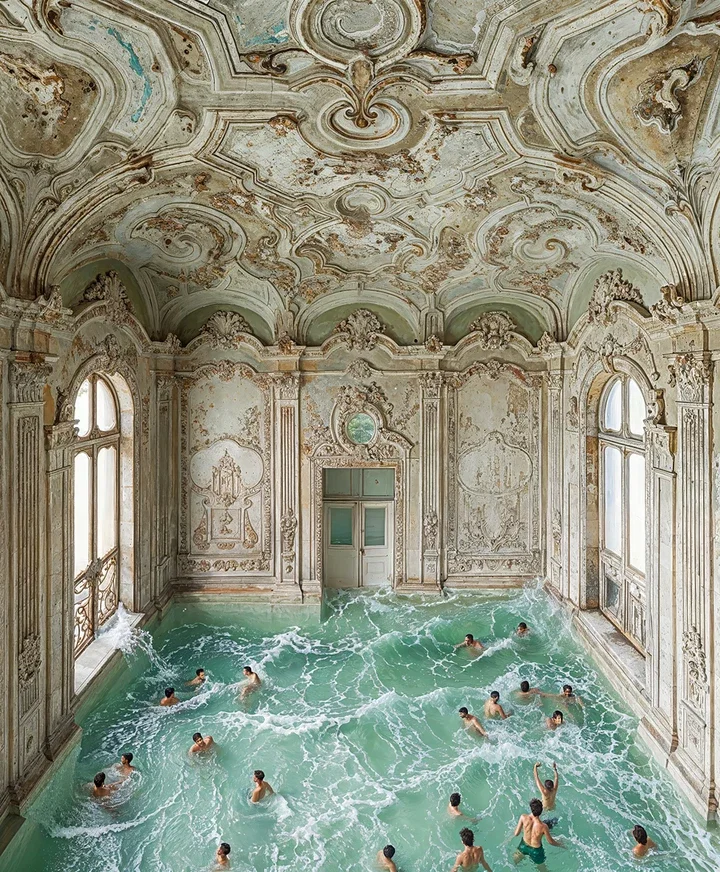
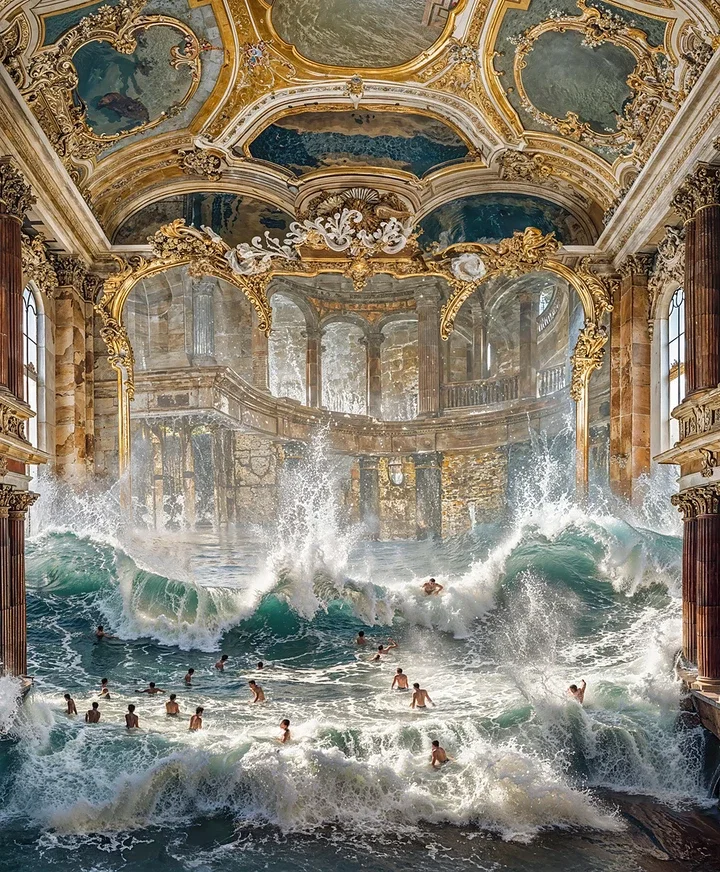
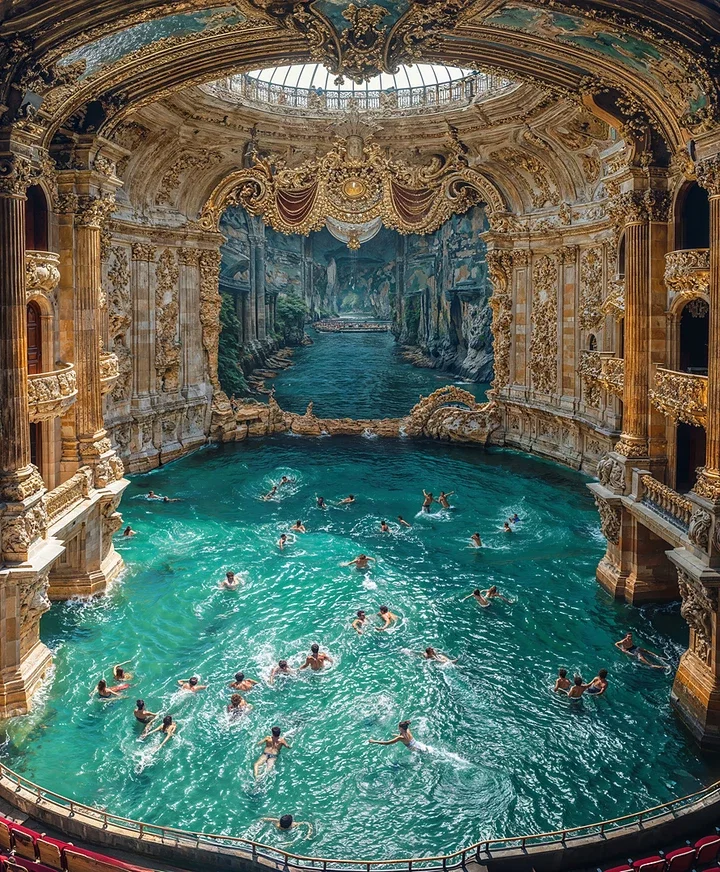
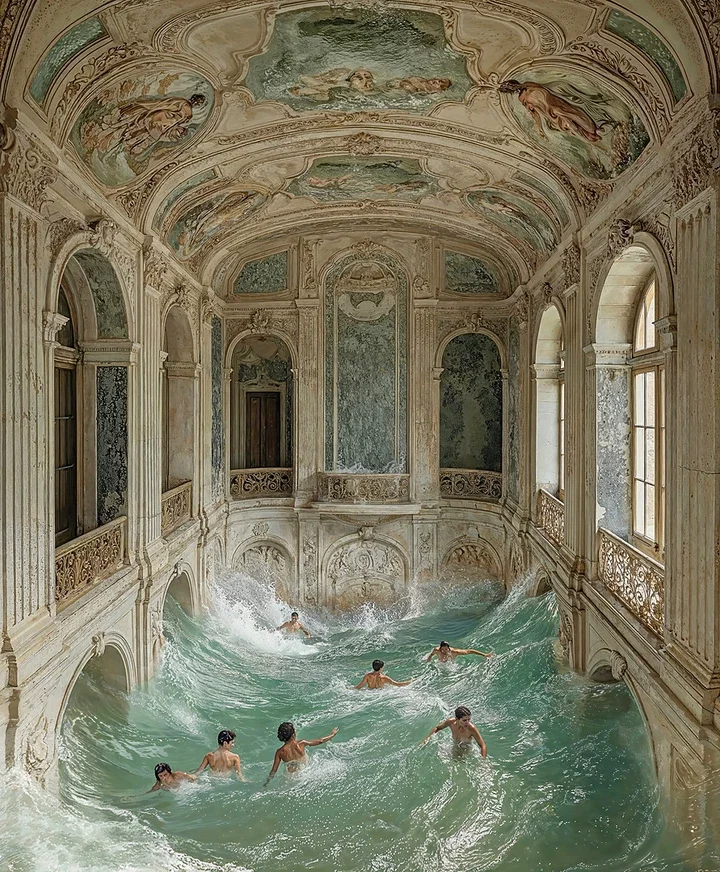
With BAROQUE POOLS, Tomislav Marcijuš opens a pictorial realm where architecture, memory, and imagination seamlessly converge. The sacred, the intimate, and the playful enter into a graceful dialogue, enriched by a consciously theatrical - almost operatic - quality. What emerges is a visual space that feels immediately accessible, yet has never truly existed. The compositions position the viewer as if seated in an auditorium: distant and observant, yet emotionally engaged. Deliberately miniaturized, mannerist-like figures sharpen the relationship between space, scale, and atmosphere – not as active protagonists, but as measures within an imagined stage.
The works draw on Marcijuš’s long-standing photographic engagement with bathhouses, churches, and villa interiors, particularly in Italy, condensing these encounters into speculative scenarios. Water functions here as both an ordering and a dissolving force: it softens the rigidity of baroque forms, lends them lightness, and opens new possibilities of movement. In each image, theatricality and stillness, exuberance and intimacy meet and recede – as if the architecture itself were continually recalibrating.
Marcijuš, a Croatian visual artist and photographer, is known for his poetic and emotionally resonant visual language. His practice revolves around themes of memory, belonging, family, and time, weaving personal experience together with cultural and historical layers. International publications have brought this intimate, atmospheric quality to a wider audience.
Alongside his artistic work, Marcijuš is an award-winning wedding photographer. His documentary, understated approach and his sensitivity to light, space, and mood also shape BAROQUE POOLS: the focus is not on the event, but on the feeling - not on the moment itself, but on its lingering afterimage.
In recent years, Marcijuš has expanded his practice to include AI-generated image worlds. Here, too, he brings together experience, aesthetics, and experimentation to explore new forms of visual storytelling. BAROQUE POOLS exists at this intersection: digitally created, sustained by imagination and a deep sensitivity to atmosphere and timeless pictorial spaces that hover between past and present. A quiet playfulness is embedded within its melancholic undertone - a play with perception and illusion reminiscent of Arnold Böcklin’s Playing in the Waves, yet guided less by stylistic lineage than by an open, contemporary understanding of images.
Ultimately, BAROQUE POOLS is not only an exploration of architecture, but of seeing itself – and of how digital tools can render cultural heritage newly experiential without smoothing away its complexity. The series does not prescribe; it opens. It creates spaces for imagination, memory, and longing, where sensuality and fantasy flow together in a gentle, continuous movement.