SOLD OUT. This edition was super popular and is now completely sold out. Be the first to hear about new artworks and get early access — sign up now and follow the artist.
Rebecca Ashley’s photographs are more than representations of the visible – they capture what is about to surface: what we sense, feel, or anticipate. Her work is guided by a quiet attentiveness to nature and a strong presence in the…
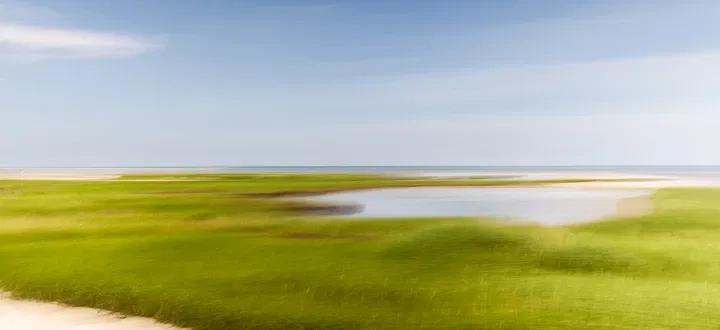
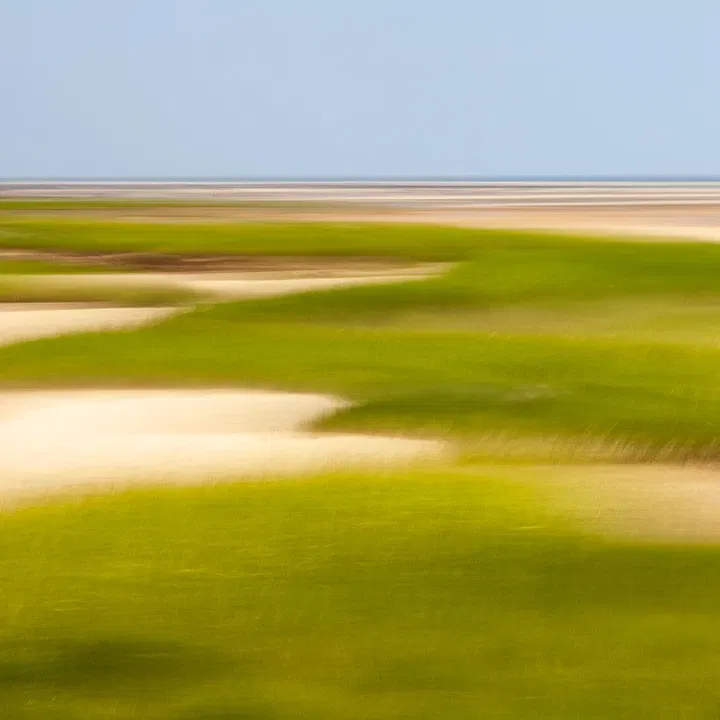
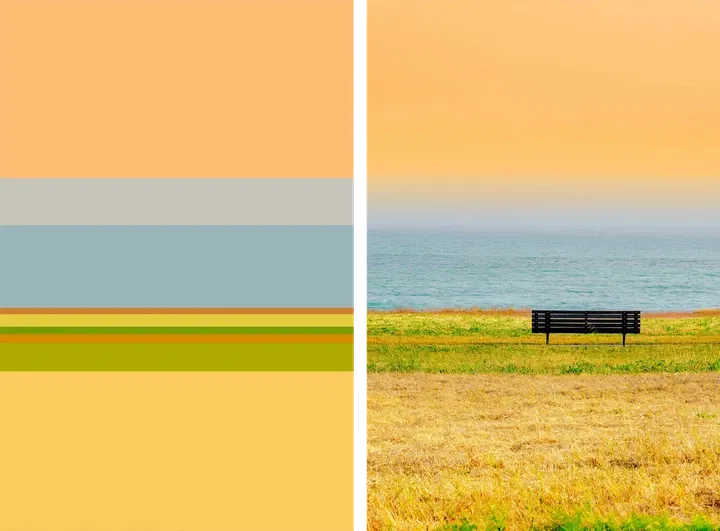
Her series such as As Far As The Eye Can See and Verdant Summer reveal how she paints with the camera: using long exposures, color as a trace of time, and a sensitivity to the ephemeral. In As Far As The Eye Can See, her gaze turns to sand, sea, and marshland – to those coastal landscapes whose vastness we can grasp in a single glance. In Verdant Summer, the color green becomes both inspiration and symbol: from deep olive tones to bright chartreuse, the summery marshlands of Cape Cod reflect change, transience, and memory. Everything is in motion and yet seems paused – like stills from a daydream.
BACKGROUND INFORMATION
Rebecca Ashley’s photographs are more than representations of the visible – they capture what is about to surface: what we sense, feel, or anticipate. Her work is guided by a quiet attentiveness to nature and a strong presence in the moment. She speaks of wanting to capture “Nature’s Music” – the crash of waves, the brush of wind through grass, the soft fading of evening light. For her, nature is a composition. Her images emerge where she is fully present – listening, waiting – for that moment when light, movement, and atmosphere converge.
Ashley’s artistic roots lie in dance. Years spent working as a dancer and choreographer continue to shape her understanding of light, space, and motion. What was once the human body is now the landscape: lines, transitions, tension held in stillness. She describes this shift as a natural progression – from working with dancers to observing the movements of the natural world, which cannot be choreographed, only received.
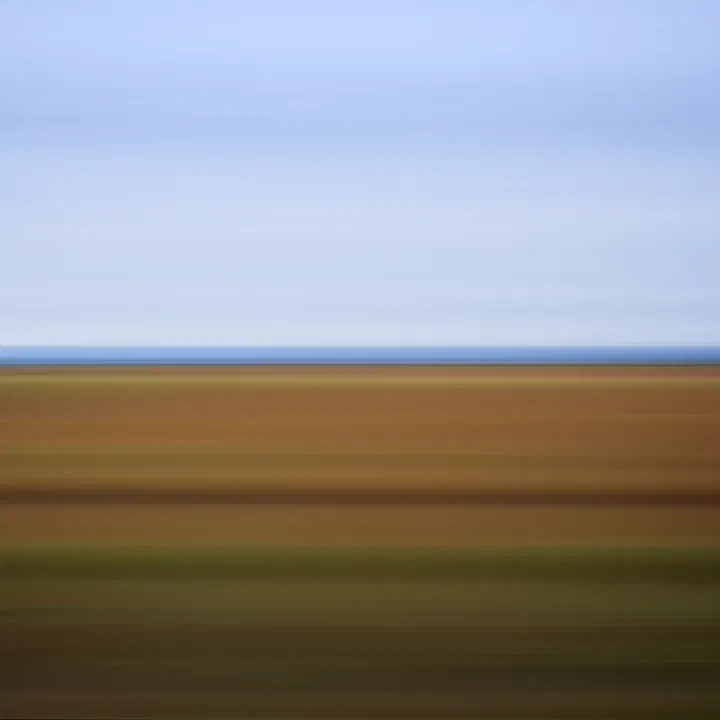
In her series As Far As The Eye Can See and Verdant Summer, Ashley shows how she paints with the camera: through long exposures, color as a trace of time, and a deep sensitivity to the ephemeral. As Far As The Eye Can See focuses on sand, sea, and marshland – coastal spaces where vast horizons unfold in a single glance. In Verdant Summer, the color green becomes both subject and metaphor: from deep olive to bright chartreuse, the Cape Cod marshes in midsummer reflect cycles of change, impermanence, and memory. Everything is in motion, yet momentarily suspended – like stills from a daydream.
Alongside her fine art practice, Ashley also works as a portrait and fashion photographer – primarily in New York, which has long served as a second creative home. Her work has been exhibited in New York galleries, featured on the cover of The Literary Review, and is held in numerous private collections across the United States. She lives, works, and finds inspiration between Cape Cod, New York, and the United Kingdom.
For Ashley, each image, each place, each moment is an invitation to look more closely. Her work invites us to see the familiar from a new angle – with curiosity, stillness, and an open gaze. It is a form of art that lends quiet beauty a voice, and reveals what can unfold when we are willing to listen.
VITA
Rebecca was born and raised in the UK where she began her lifelong love of the natural world. In her earlier years she trained as a dancer and worked professionally as a dancer and choreographer in NYC.
Exhibitions
2025 Opening Fall 2025, As Far As The Eye Can See, The 101 Gallery, New York, NY
2024 Group Show, Provincetown Arts Society, Provincetown, MA
2018 Corps de Clone and Bromoils, River Arts, Hastings on Hudson, NY
2014 Corps de Clone, Culture, New York, NY
2013 Corps de Clone, Culture, Brooklyn, NY
2011 Drive, PyV, Brooklyn NY
INTERVIEW
Picasso once said, “you don’t make art, you find it.” Where do you find your art?
To “find” art I need to be in the right frame of mind, which is almost always when I’m in nature. As my senses and awareness heighten, I listen as much as I look— the sounds of birds, breezes or waves informing, even altering, how I capture an image.
From an idea to its materialization: How do you approach your work?
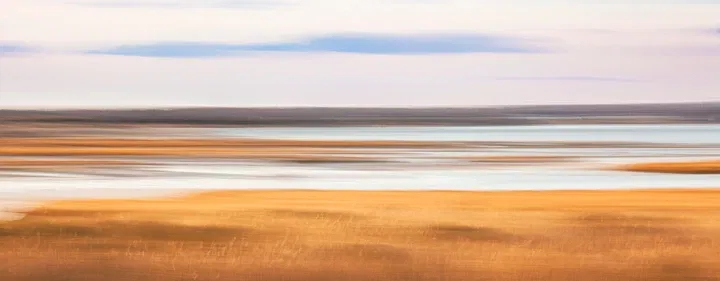
I’m always scouting new locations, considering color, texture, and line as I look at beaches I’ve not yet shot. I visit a location over and over, considering it from various viewpoints and times of day; taking in the direction and intensity of how light falls across it. When a new beach speaks to me, I set up and shoot several images as prototypes. I know the texture I’m seeking, but each location is different, so I take numerous shots, adjusting my camera’s settings until I can capture what I’m looking for. Then I’ll take hundreds of pictures, moving two or three times across the same beach. In review, I’ll choose just a handful of images. Afterward, I’ll return to the same beach at different times of year. This way, at the very same spot, I can capture images of seagrass that’s lush green in midsummer and then a beautiful brown-and-yellow in the fall.
What is your favorite book?
In my early twenties, I read Lawrence Weschler’s Seeing is Forgetting the Name of the Thing One Sees, about the life and work of visual artist Robert Irwin. The book altered the way I look at both art and nature. To this day, I remember passages that changed my “seeing” forever.
Another favorite is Sally Mann’s memoir Hold Still. So many artists work to maintain a sense of mystery about how they do what they do, but Mann lets us into her process, demystifying how she takes her images. She’s one of my favorite photographers and I was so moved by her honesty and vulnerability in discussing her craft.
Which artist would you like to have coffee with and what would you discuss?
Forget the coffee: I want to go on a shoot with Sally Mann and then watch her develop her film.
Imagine you have a time machine. Where would you go?
I’d travel to Delft, in the Netherlands, say around 1660, with a bottle of good wine and two glasses, to sit down with Johannes Vermeer and discuss how he did (or did not?) use optical devices in his painting process.
What are you working on right now?
A series of images of Chesil Beach in Dorchester, England, which I took in February of this year. The pictures were shot at sunset from land, looking over a tidal lagoon called the Fleet. I was captured by the landscape: the still waters of the Fleet; the dark black line of beach; the sun setting over all of it. Breathtaking.
LUMAS ART NEWS
Exclusive offers
Inspiring new releases
Personal invitations to Art Events
LUMAS protects your data. See our Privacy Policy for details.
ALMOST DONE ...
1. Open the confirmation mail.
2. Click on the confirmation link.
3. Your wishlist registration was successful!
4. Your wishlist has been saved!
We look forward to welcoming you soon to the world of LUMAS.
DIGITAL PREVIEW
SCAN THE QR CODE! (Safari IPHONE ONLY)
PREVIEW ON YOUR WALL
SCAN THE QR CODE! (Safari IPHONE ONLY)
90% of our customers order mounting or framing for a perfect gallery look.
Fully protected by our 30 day return policy.
Ready to Hang.
Elevates the artwork to true gallery quality.
Continue without mounting or framing?
* Rolled prints are final sale and cannot be returned or retrofitted with our frames




 About Rebecca AshleyRebecca Ashley’s photographs are more than representations of the visible – they capture what is about to surface: what we sense, feel, or anticipate. Her work is guided by a quiet attentiveness to nature and a strong presence in the…