Serkan Altinoz transforms water into his canvas. With a base defined by flow and change, the New York-based artist explores nature, memory, and transformation. The almost hypnotic patterns are the result of a complex approach that has its origins in a centuries-old technique passed down through generations: Ebru—the art of marbled paper. What was once a craft becomes a contemporary visual language in his work—a microscope that reveals the diversity in even the smallest unit.
For each project, he fills a basin with two hundred liters of water. Pigments, extracted by hand from natural materials, meet the surface: drops, streams, threads. The floating colors react to every decision, every impulse. Only when the image in the water is complete is it transferred to paper. With pipettes, needles, and even flames, he controls their movement—a choreography of precision and chance. Altinoz controls in order to let art happen—a process between adding and letting go.
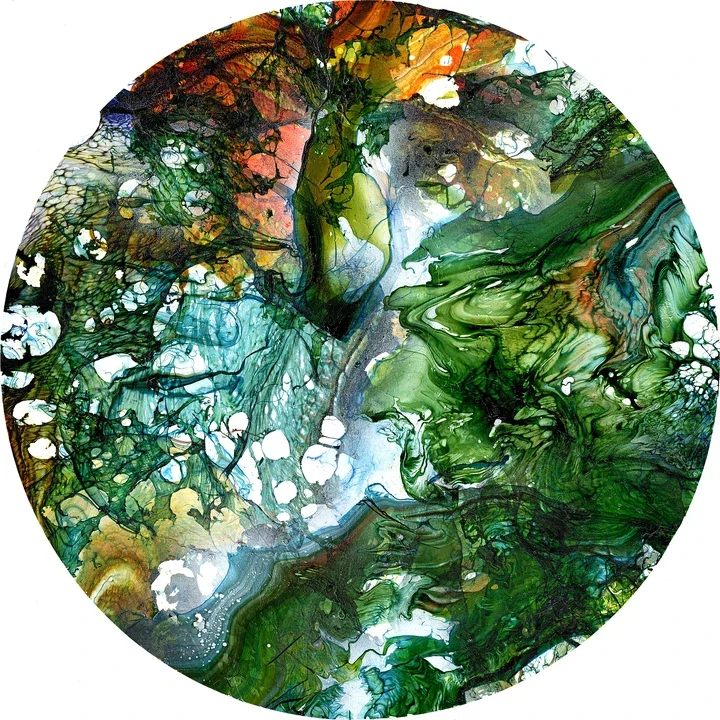
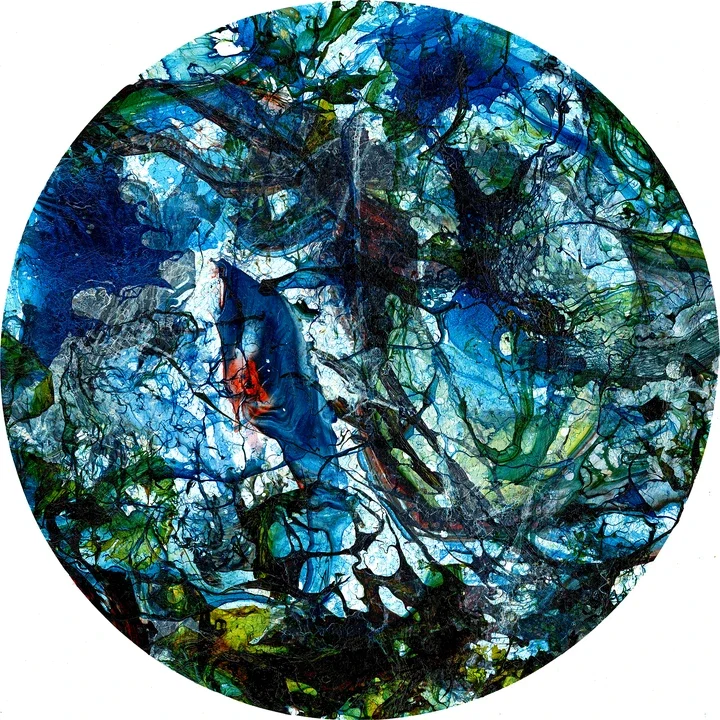
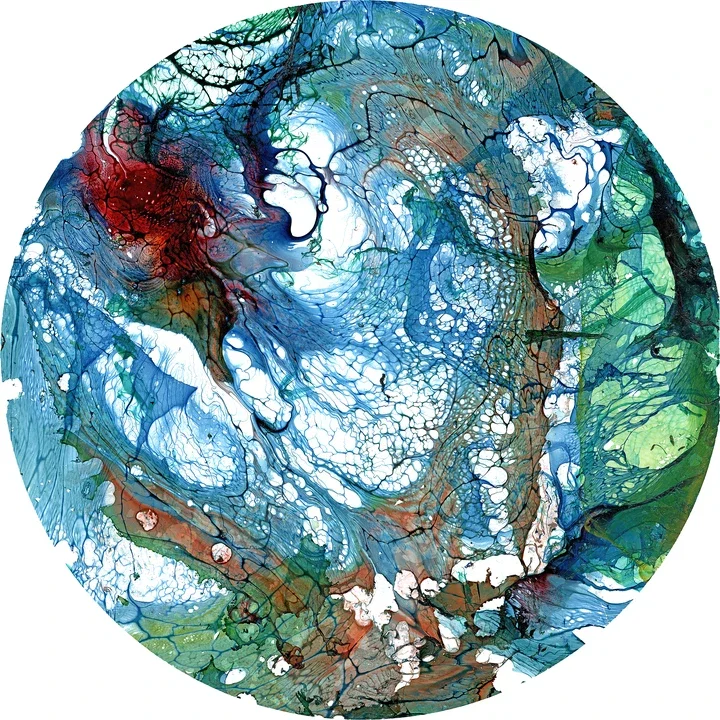
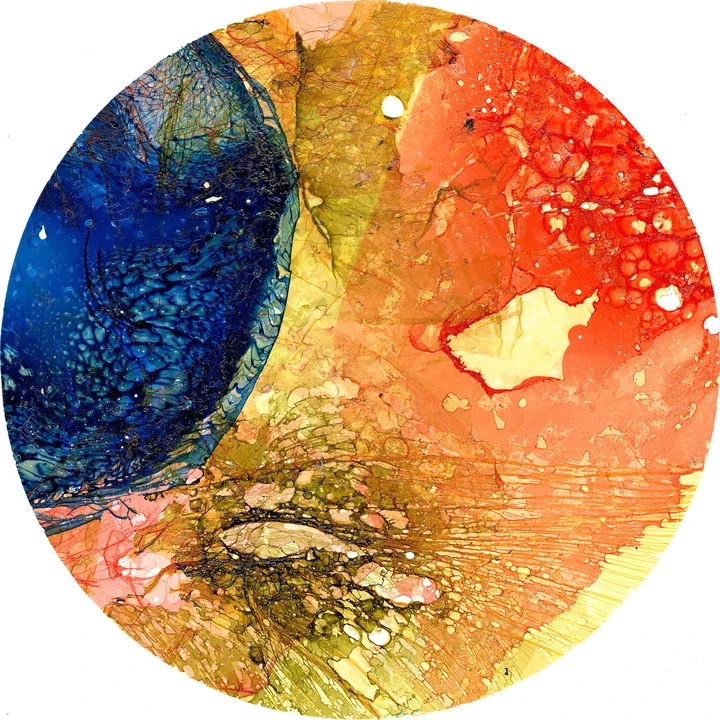
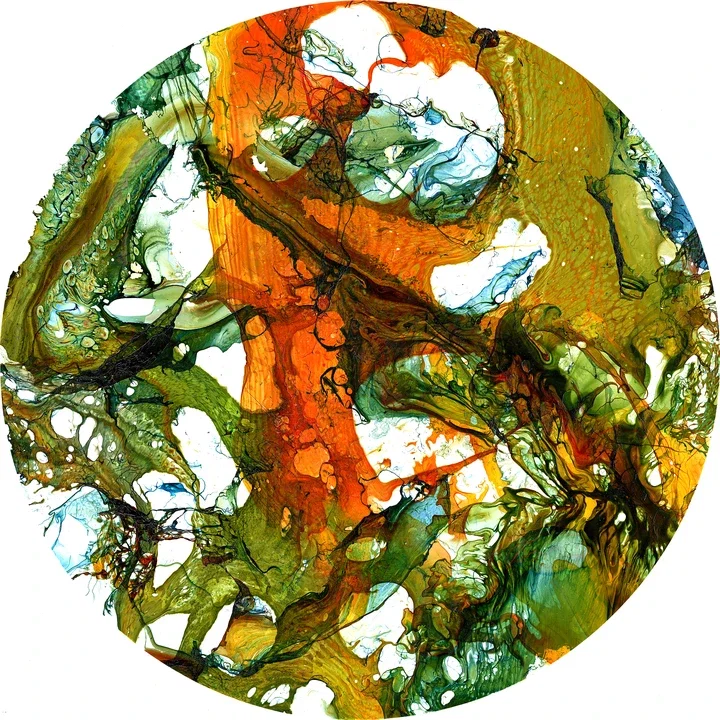
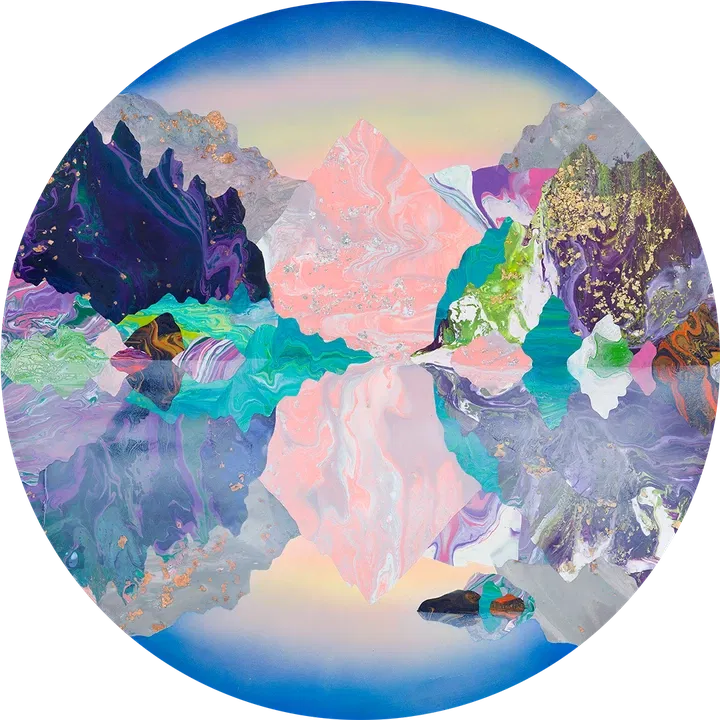
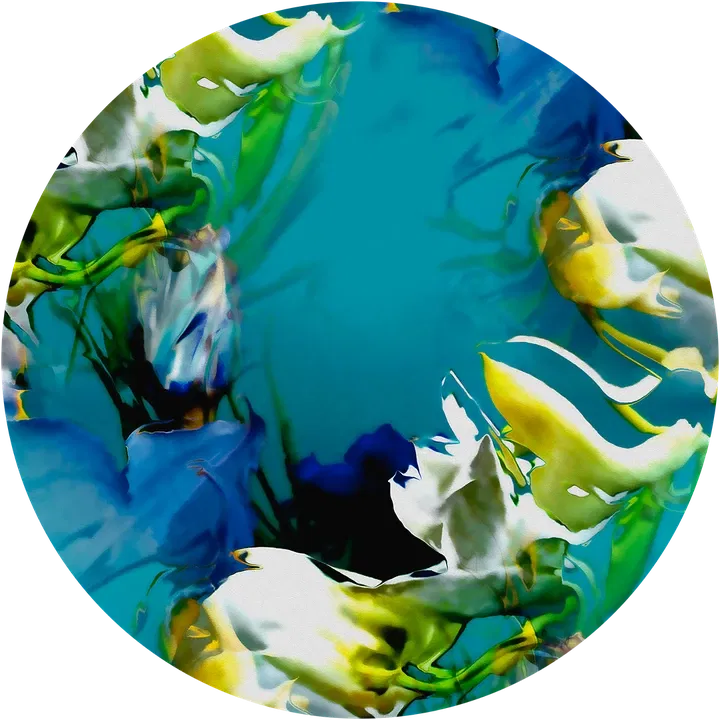
What remains on the page is reminiscent of cellular structures, cosmic landscapes, formations that appear both primal and unseen. A tension that intensifies in his series The Spirit of Water: a sphere as a recurring motif, a planet, a microcosm, a self. A single life—infinitely multifaceted.
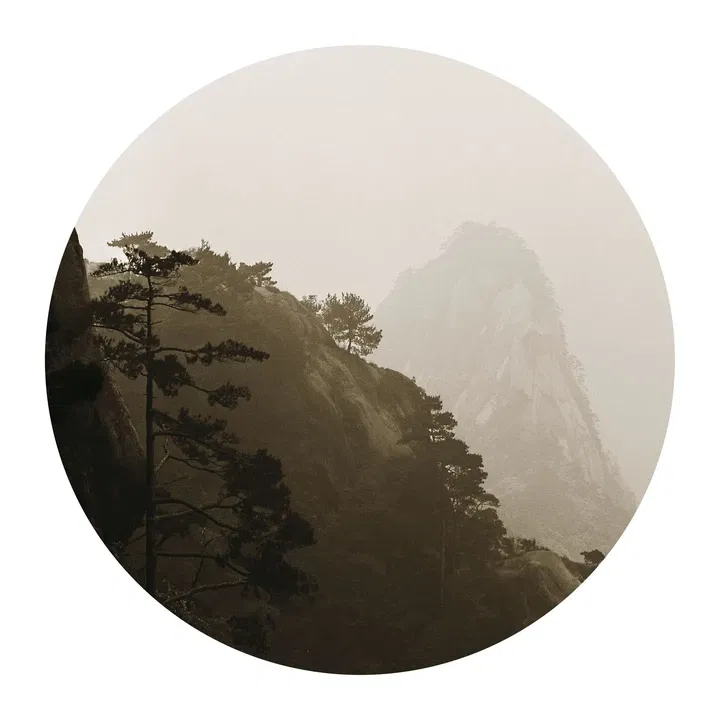
The spheres are similar in outline, but not in essence. Each has its own texture, its own history, its own climate. Like within us: a common form, countless nuances. A reminder that individuality is not opposed to unity, but arises from it.
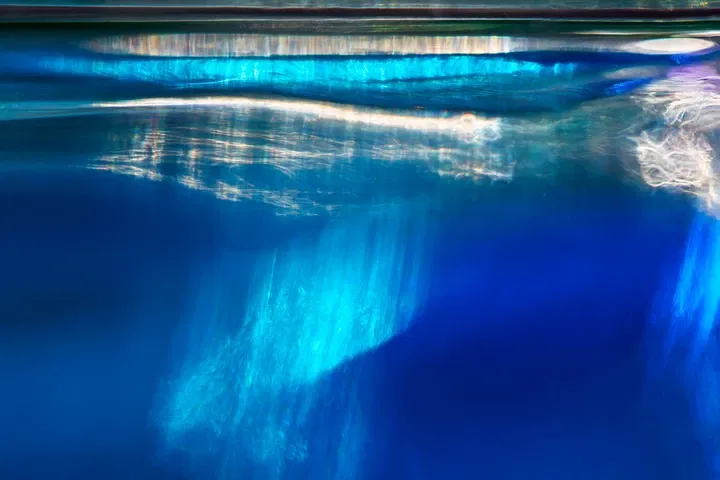
Water as a medium is more than just a technique: a source of life becomes a source of inspiration. A symbol of change, imagination, openness – and the significance of art and creativity itself: a source that we do not need to survive, but we do need to live. Altinoz understands water as an element that, like creativity, never stands still and refuses to take on any definitive form.
„The meaning isn’t mine to give. It’s yours to find“, he says, „I’m not here to explain. I’m here to create.“
Maybe that's the essence of his art: that the image doesn't explain itself, but wants to be felt. That the artist's job is to create—and ours is to experience. Because when our interpretations differ, a kaleidoscope of meaning emerges. This brings to life the idea that drives his work: the idea of an entire cosmos in a single unit.
Picasso once said, “You don't make art, you find it.” Where do you find your art?I find my art at the intersection of deep, ancient memory and constant experimentation. I believe art imitates life, which is essentially a constant search for balance between chaos and order. Finding that balance requires long periods of observation and endless trial and error. I don’t seek to 'create' forms, but to look for them within the silence of the process. I find the art within myself first, then use water as a primary collaborator and a witness to billions of years of transformation. It is the messenger I use to bring those internal rhythms and my inner world to the surface.
From idea to realization: How do you approach your work?
My approach is a ritual that combines technical discipline with the magic of letting go. I spend hours calibrating the water ,pigments and mediums to set the stage, but once I begin, I move from dictating to listening. It becomes a dialogue. I suggest a direction and allow the interplay between chance and intention to reveal something unexpected. My role is to be a witness to the process and recognize the exact moment when the work reveals its true self so I can capture it.
What is your favorite book?
I don’t have a single favorite, but for the last couple of years, Rick Rubin’s "The Creative Act: A Way of Being" has been my essential guide. It resonates deeply with my practice because it treats art not as a career, but as a fundamental way of existing in the world. It’s a constant reminder to stay open to the "source" and to trust the invisible energy that leads the way, which is exactly how I feel when I stand over the water.
Which artist would you like to have coffee with, and what would you talk about?
To be honest, I prefer the company of the work over the creator. I’ve often found that a person’s public persona can distract from the purity of their creation. There is a certain risk in meeting your heroes; the human reality doesn't always align with the spiritual depth of the art. I value the solitude of my studio too much to trade it for small talk. I believe everything an artist needs to say is already present in their work. I prefer to meet other artists through the energy they leave behind on the canvas or in the stone. The most profound dialogues happen in silence.
How did you come to art?
I didn't 'come to' art; I was born into it. I grew up in a house where someone was always either playing an instrument or having a conversation about art. My father is a musician and a 5th-generation traditional paper marbling (Ebru) master, so for me, being the 6th generation isn't a title , it’s just the environment I was born into. Art and music weren't 'subjects' we discussed; they were the only things that truly existed in our daily life. However, moving to New York 13 years ago was the real turning point. It allowed me to strip away the weight of tradition and find the raw, industrial energy that I needed for my own voice.
Which people in your surroundings influence you?
I am primarily influenced by the technical discipline of my father and the masters who mentored him; their profound respect for the craft set my foundation. In New York, I am inspired by the community of makers who place unwavering faith in their creative energy and push boundaries relentlessly. I look for people who treat their materials not just as tools, but as living entities with their own stories to tell.
Imagine you had a time machine. Where would you travel to?
I would travel back to the 10th or 15th century to meet the earliest masters of Ebru at the genesis of the craft. I want to witness the exact moment they moved beyond traditional methods to discover the alchemy of painting on water. Seeing the raw discovery of natural pigments, binders, and mediums would be profound. I want to see how they found harmony in the perceived chaos of their materials using only what nature provided them.
What is your greatest passion outside of art?
Music is my greatest passion, especially playing the bass guitar. It is where I calibrate my internal frequency and keep my creative soul tuned. I firmly believe that artists must nourish themselves not only through their own craft but by exploring other artistic fields to maintain a fresh perspective. However, when I need to clear my mind and find true clarity, nothing compares to being in nature. I find peace in being a witness to its organized chaos and the raw, beautiful complexity of its creations.
What are you currently working on?
I am currently working on two large-scale commissioned paintings from my Untitled Planet series. Alongside these, I’m producing a long-form cinematic video that documents the full creation process of my work. I want to show that the final result is only a small part of the story; I want to share the raw, focused ritual that happens behind the scenes in the solitude of my studio.