New
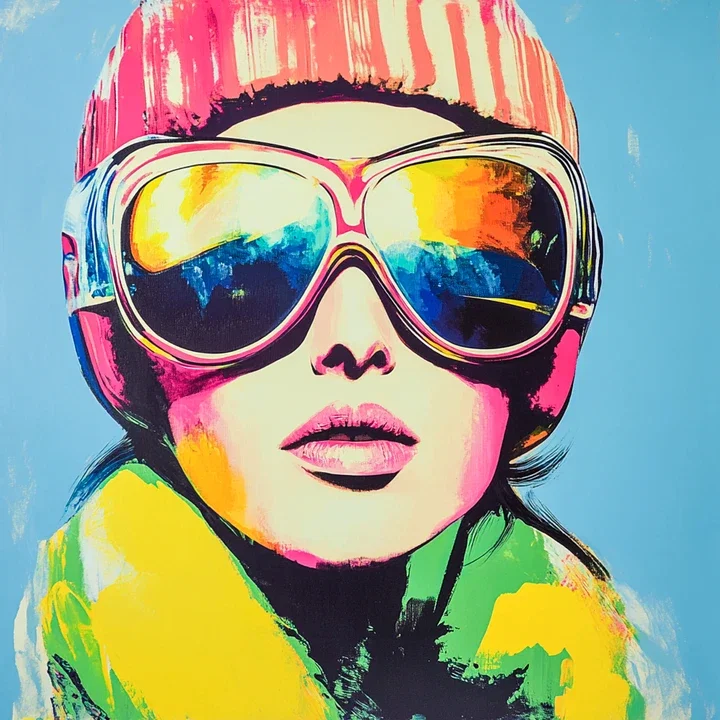
Unfortunately, this artwork cannot be added to the room view.


Claudia Sauter’s women do more than fill the canvas — they claim their space. Through intense colours and tightly framed close-ups, the Swiss artist presents femininity as a self-defined… Read more
Bio Interview
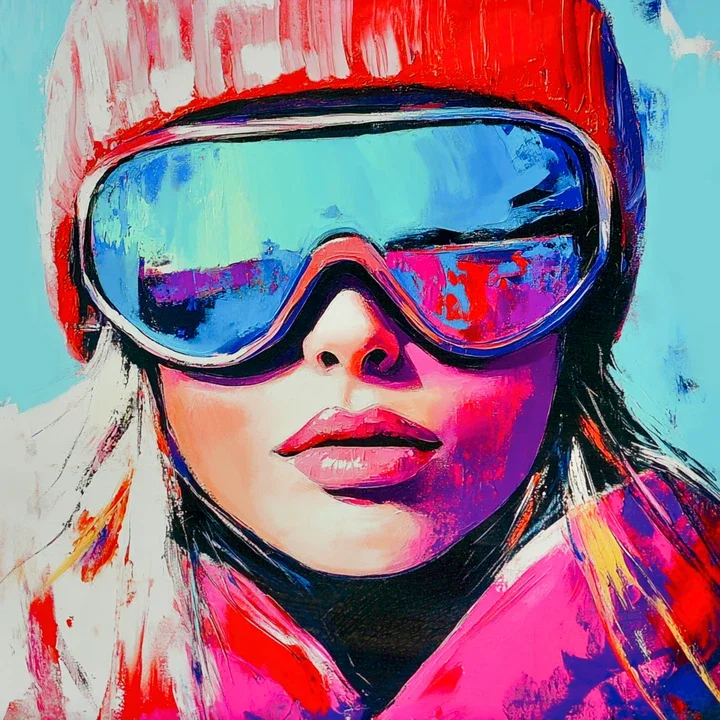
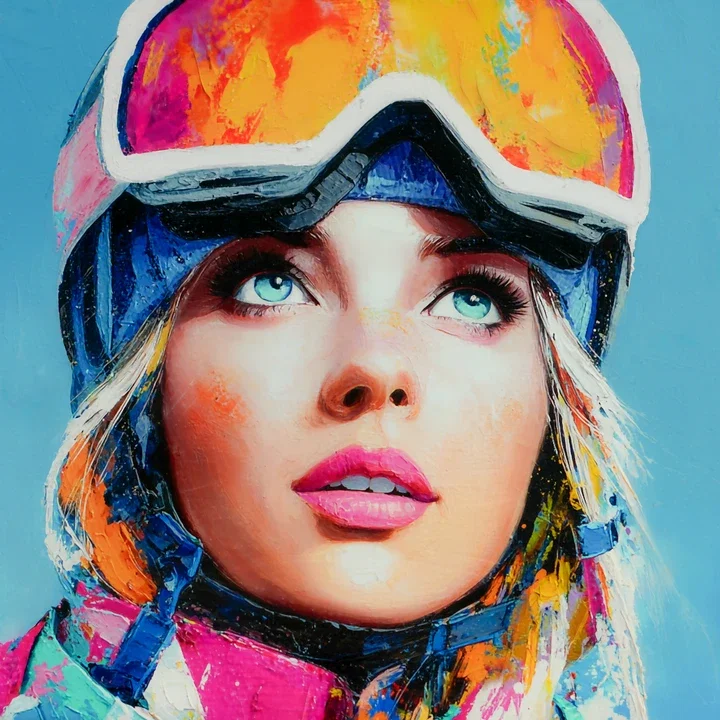
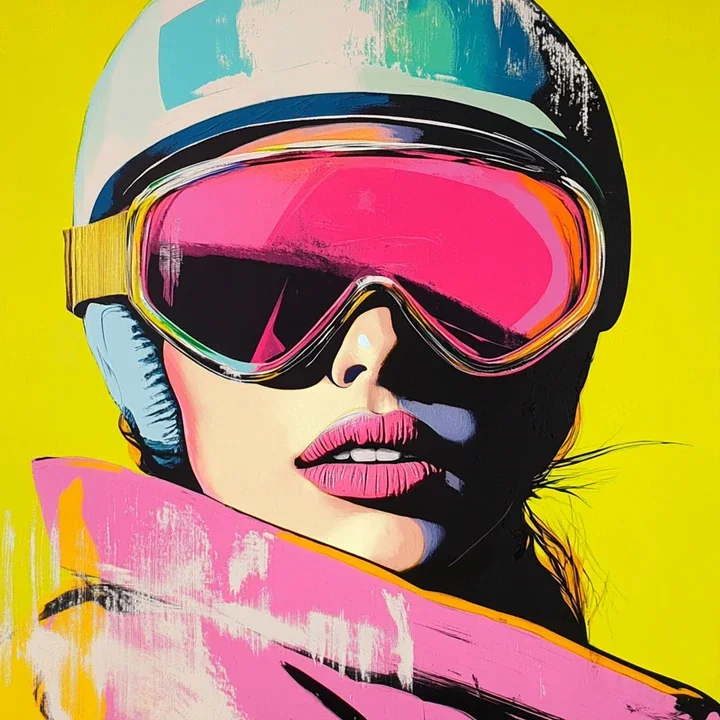
Claudia Sauter is a Swiss Pop Art artist who lives and works in Küsnacht, near Zurich. Her design education began at the Neue Kunstschule Zürich, where she studied advertising design from 1994 to 1997. She then trained in interior design from 1998 to 2000. Later, she deepened her knowledge of design, art, and arts and heritage management.
Picasso said: “You don’t make art, you find it.” Where do you find your art?
I find my art above all in people — in their presence, in their gazes, in moments that often remain unspoken. I’m interested in the space in between: the tension between strength and vulnerability, presence and withdrawal. I spend a great deal of time observing and translate what I perceive into colour and form.
From the initial idea to the finished piece: how do you approach your work?
My life and everyday experiences are my most important source of inspiration. Encounters, observations, moods — often, it’s the small moments that provide the spark. Women are at the centre of my work. I encounter them everywhere — in my own circle, in public spaces, in fleeting moments of observation. I draw on these impressions and deliberately place them at the heart of my paintings. These observations give rise to an initial, often very intuitive idea. From there, the work develops step by step: colours, expression and composition respond to one another and shape the presence of the finished piece. I don’t follow a rigid plan, but leave room for the work to evolve — with a clear sense of the effect and presence I want the finished painting to have.
Your greatest passion outside art?
I’m interested in people, systems and the connections between things. This curiosity shapes many aspects of my life — and it also shaped my earlier work in strategy. I enjoy understanding things and putting them into context. At the same time, design and nature play an important role in my life. Design for its clarity and aesthetics, nature for its calm and effortless presence — to me, they are powerful counterpoints that inspire me and keep me grounded.
How did you find your way to art?
Art has always been a part of me, although for a long time it wasn’t at the centre of my life. I initially pursued a conventional career in marketing and communications, where creativity was present, but within a structured framework. At some point, the desire to express myself more freely and personally grew stronger. Painting gave me precisely that opportunity — to make themes such as identity, presence and emotion directly visible. What began as a parallel pursuit gradually became a central part of my life and work.
Which artist would you like to have coffee with — and what would you talk about?
Jeff Koons. I’m fascinated by the way he connects art, commerce and perception, and by the clear, powerful visual language he has developed in doing so. I would talk to him about how he manages to balance emotion, surface and meaning in his work — and about how art positions itself today between aesthetics, the market and social relevance.
Which people around you influence you?
I’m inspired by people who follow their own path and have a clear sense of what they stand for. They aren’t necessarily public figures; often, they are people in my immediate circle who make an impression through their presence and authenticity. My family plays a particularly important role. They are an important anchor for me — and also a source of inspiration, because family is where closeness, trust and authentic personalities come together.
Imagine you have a time machine. Where would you go?
I’d like to travel to different eras — not so much out of nostalgia, but to understand how perception, ideas about social roles and aesthetics have changed. I’d be particularly interested in periods of transition, when something new is taking shape in society.
What are you working on at the moment?
I’m currently working on new portrait series exploring contemporary femininity and identity. As a Swiss artist, I’m particularly interested in the subject of women in Switzerland. I’m exploring ways to make women visible in their different roles — in various professions and activities, as well as in their personal passions. For me, this is not just about representation, but about presence: deliberately bringing their strength, individuality and beauty to the fore. At the same time, I’m developing projects that give art a greater presence in different contexts — for example, through collaborations with brands or in public spaces.
Your favourite book?
A book that made a particular impression on me is Goethe und Schiller – Geschichte einer Freundschaft (Goethe and Schiller – The Story of a Friendship) by Rüdiger Safranski. What fascinates me is not only the relationship between Johann Wolfgang von Goethe and Friedrich Schiller, but also the way two strong personalities can inspire one another and help each other grow. I find this interplay between individuality, exchange and intellectual depth particularly compelling — it also reflects themes that concern me in my own work: identity, perception and the power of dialogue.